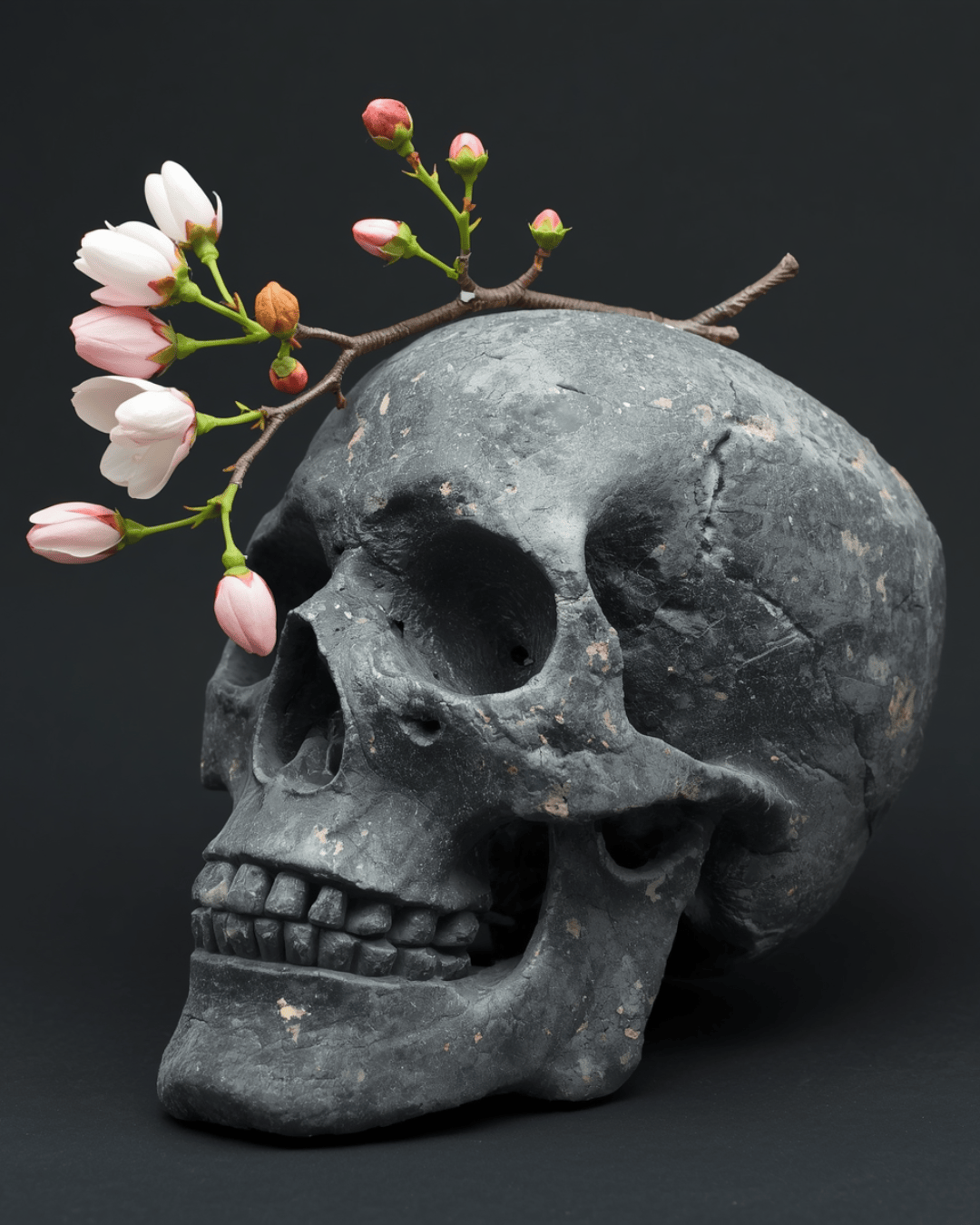
Why did artists place a skull beside—or even in the hands of—Mary Magdalene? Was the skull only an emblem of mortality and a reminder of Golgotha, “the place of the skull”? Or has the Magdalene been clinging to the stone the builders rejected—the stone over which they stumbled?
Mary Magdalene and Her Shorn Bridegroom?
Until the revised Roman Calendar took effect in 1970, the Western Church had long identified her with the woman who anointed Jesus, the woman who loved much, and the Bride who sought her Bridegroom in the Song of Songs.
Today, the prevailing belief is that Christ never married. So was the Woman Jesus called the Magdalene left standing alone in the Garden, without a husband? Is this why the angels and the Man Jesus called Teacher say to her:
“Woman, why are you weeping?”(John 20:15)
And is this why the Teacher—the Man she turns toward and calls Rabboni—says:
“Do not cling to me.”(John 20:17)?
Does this have anything to do with the Man Jesus called Simon—the one chosen as the Rock, the foundation stone of the church, the Jesus family?
Would you like to continue contemplating?
This reflection continues on my main website, lindavogtturner.ca, in “Did Jesus Let Peter Remain a Friend with benefits?” At the end of the complete reflection, you will also find an invitation to read my new book, Epiphany Journey: Christmas to Pentecost, together with instructions for receiving a private reading link.
Epiphany Journey grew from my nineteen-part Epiphany blog series, but it is not simply a collection of those original posts. The reflections have been revisited and revised, then brought into dialogue with nineteen full-page images and the passages of Scripture accompanying them. Together, they serve as icons and thresholds—visual and biblical doorways guiding the reader toward the epiphany the original series was seeking to bring into view.
What does it mean to be ready to meet God? Do you need to know Christ and have faith in Him?
“I am not the Christ, but I have been sent before him. The one who has the bride is the bridegroom. The friend of the bridegroom . . . rejoices greatly at the bridegroom’s voice.”
For the Teacher who rejoices with the bridegroom is the same Teacher who once spoke to God — and heard Him answer with thunder when the LORD descended in fire.
At Sinai, God told Israel’s teacher Moses to prepare the people to meet Him.
The LORD said to Moses,
“Behold, I will come to you in a dense cloud, so that the people will hear when I speak with you, and they will always put their trust in you.”
“Go to the people and consecrate them today and tomorrow. They must wash their clothes and be prepared by the third day — for on the third day the LORD will come down on Mount Sinai in the sight of all the people.”
“And you are to set up a boundary — Only when the ram’s horn sounds a long blast may they approach the mountain.”
When Moses came down from the mountain — he consecrated them, and they washed their clothes. Then he said:
“Be prepared for the third day. Do not draw near to a woman.”
How would separating men and women prepare the people to meet God? Was this merely to keep their bodies and clothes clean? Or was this two-day separation a reminder that God — as man was created — is male and female?
For on the Sixth day:
God created man in his own image, in the image of God he created him; male and female he created them.
And it came to pass:
On the third day, when morning came, there was thunder and lightning.
A thick cloud was upon the mountain, and a very loud blast of the ram’s horn went out, so that all the people in the camp trembled.
For fear of lightning’s fire —
Moses brought the people out of the camp to meet with God, and they stood at the foot of the mountain.
Mount Sinai was completely enveloped in smoke, because the LORD had descended upon it in fire. And the smoke rose like the smoke of a furnace — and the whole mountain quaked violently.
When the sound of the ram’s horn grew louder and louder, Moses spoke, and God answered him in thunder.
With thunder,
The LORD descended — Moses went up.
So Moses the Teacher of Israel — ascended — to meet with God — on the third day.
And the LORD said to him:
“Go down and warn the people not to break through to see the LORD, lest many of them perish.”
Why would the LORD prevent the people from meeting Him “face to face,” privileging only the priestly class to climb partway up the mountain?
Was idolatry the issue? Or was this a discipline — to hear and to heed the Word?
And the LORD replied —
“Go down and bring Aaron with you. But the priests and the people must not break through to come up to the LORD, or He will break out against them.”
So Moses went down to the people and spoke to them.
The next verse begins —
And God spoke all these words: “I am the LORD your God, who brought you out of the land of Egypt, out of the house of slavery. You shall have no other gods before Me. You shall not make for yourself an idol in the form of anything in the heavens above…”
Yet Moses spoke with God — and God answered him with thunder — the voice of the Father on the First Day of Creation.
For upon Ruach’s hovering over the deep watery cloud, a sound came forth in the thunder — saying, “Let there be Light.” And there was — Lightning.
And so, according to the testimony of Moses, God spoke — and the world was formed through thunder and lightning — and He made two great lights: the sun to rule the day, and the moon to rule the night.
So how does having faith in Moses the Teacher of Israel and in Christ give people hope?
According to the Gospel:
In the beginning was the Word, and the Word was with God, and the Word was God.
He was with God in the beginning. Through Him all things were made, and without Him nothing was made that has been made. In Him was life, and that life was the light of men.
The Light shines in the darkness and the darkness has not overcome it.
There came a man who was sent from God. His name was John. He came as a witness to testify about the Light, so that through him everyone might believe.
He himself was not the Light, but he came to testify about the Light.
And through that witness,
Once again the Light came among the people — and said:
“I am the Light of the world.”
And God said: “Let there be Light.”
And there was — Light.
John the Forerunner paves the way for the bride who belongs to the bridegroom — and rejoices to hear the bridegroom’s voice.
Simon hears his beloved friend’s voice — and puts on his garment to declare his love for Jesus.
In Jerusalem, the companions of Cleopas say —
“The Lord has indeed risen — and has appeared to Simon.”
For on the Third Day:
There was — lightning and thunder — fire on God’s holy mountain.
And when He had led them out as far as Bethany, He lifted up His hands and blessed them.
While He was blessing them, He was taken up into heaven.
And they worshipped Him — and returned to Jerusalem with great joy.
And while they were gathered together, He commanded them:
“Do not leave Jerusalem, but wait for the gift the Father promised, which you have heard Me discuss.”
As they were waiting, they recalled how Jesus said:
“I am the vine and you are the branches. The one who remains in Me, and I in him, will bear much fruit.”
“This is to My Father’s glory, that you bear much fruit, proving yourselves to be My disciples.”
“As the Father has loved Me, so have I loved you.”
“If you keep My commandments, you will remain in My love, just as I have kept My Father’s commandments and remain in His love.”
“I have told you these things so that My joy may be in you and your joy may be complete.”
And —
Suddenly a sound like a mighty rushing wind came from heaven and filled the whole house where they were sitting.
And they were all filled with the Holy Spirit and began to speak in other tongues as the Spirit was giving to them to declare forth.
Then Peter stood up with the Eleven, lifted up his voice, and addressed the crowd:
“Men of Judea and all who dwell in Jerusalem, let this be known to you, and listen carefully to my words.”
“These men are not drunk, as you suppose. It is only the third hour of the day!”
And those from Cana recalled:
The wedding in Cana on the third day — and how the Mother of Jesus had said to Him:
“They have run out of wine.”
And how the Bridegroom, called aside, had said:
“Everyone serves the fine wine first, and then the cheap wine after the guests are drunk. But you have saved the fine wine until now!”
Jesus performed this, the first of His signs, at Cana in Galilee. He thus revealed His glory, and His disciples believed in Him.
As Peter continued speaking to those gathered — those with eyes to see and ears to hear — they heard and saw the Forerunner’s Joy: the bridegroom’s voice proclaiming:
Good news of great joy that will be for all the people.
Too much light can be blinding and crippling, especially for those who have been born and kept in the dark.
This is the nineteenth — and final — in a series of Epiphany reflections.
What began as a series of reflections has become a journey — one that continues to unfold, as I listen again to the Scriptures and discover how Scripture speaks to Scripture — and how the Word prepares ears, eyes, and hearts to meet with God.
The next step in my faith journey is the gathering of these reflections into a book: Epiphany Journey: Christmas to Pentecost.
In this forthcoming volume, I have refined each of the Epiphany reflections and added sidebars to draw attention to the Scripture passages revealed in each Epiphany.
If you would like to receive a copy of Epiphany Journey: Christmas to Pentecost, please check my website. When it is ready, I will make an announcement on my Home Page. Better yet — be sure to subscribe for new blog posts.
On the first day of the week, very early in the morning, the women came to the tomb…They found the stone rolled away, but when they entered, they did not find the body of the Lord Jesus.
And they shall cleave—and be one flesh.
While they were puzzling over this, suddenly two men in radiant apparel stood beside them. As the women bowed their faces to the ground in terror, the two men asked them,
“Why do you look for the living among the dead?…He is not here; He has risen! Remember how He told you while He was still in Galilee:
The Son of Man must be delivered into the hands of sinful men, and be crucified, and on the third day rise again.’ ”
And so it was that:
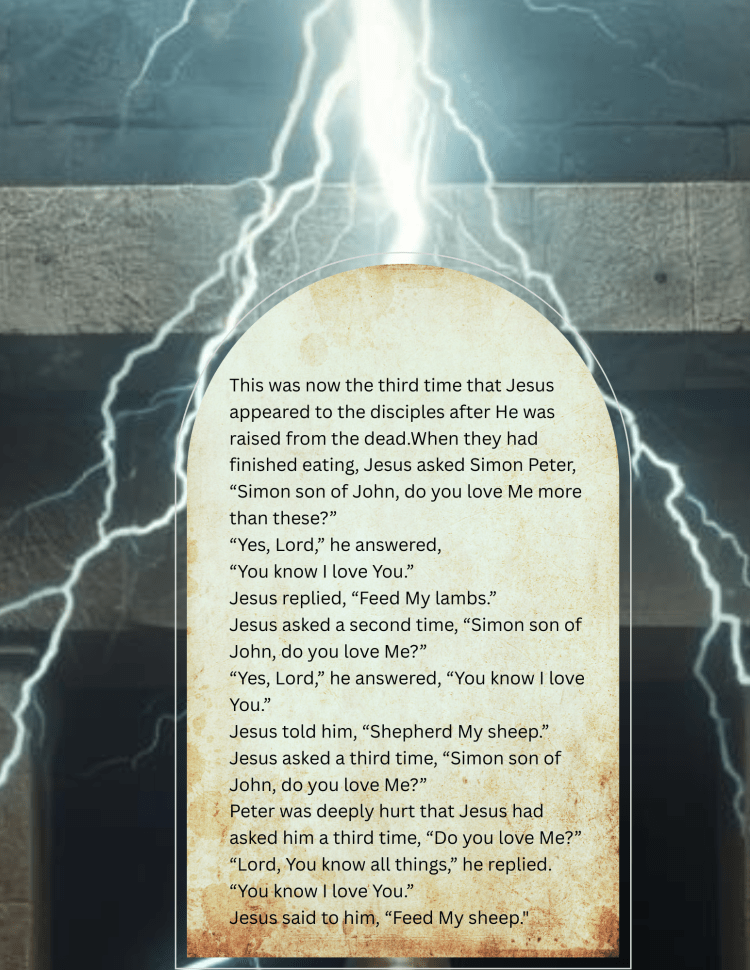
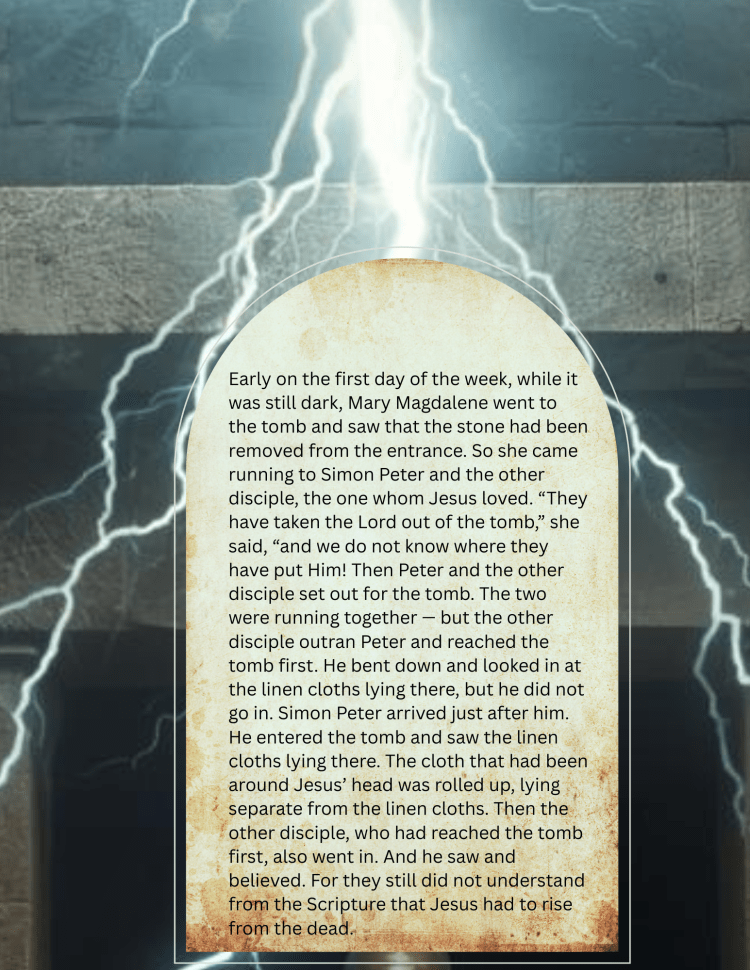
Simon found the cloth that had been around Jesus’ head rolled up, lying separate from the linen cloths. Thenthe other disciple, who had reached the tomb first, also went in. And he saw and believed. For they still did not understand that — from the Scripture — Jesus had to rise from the dead.
That same day, two who had been at the tomb were discussing this.
As they were walking along, Jesus came along beside them. But their eyes were kept from recognizing Him.
One of them, named Cleopas, asked Him,
“Are You the only visitor to Jerusalem who does not know the things that have happened there in recent days?”
“What things?” He asked.
“The events involving Jesus of Nazareth,” they answered.
“This man was a prophet, powerful in speech and action before God and all the people. Our chief priests and rulers delivered Him up to the sentence of death, and they crucified Him.
But we were hoping He was the One who would redeem Israel.
And besides all this, it is the third day since these things took place.”
Then Jesus said to them,
“O foolish ones, how slow are your hearts to believe all that the prophets have spoken!
Was it not necessary for the Christ to suffer these things and then to enter His glory?
And beginning with Moses and all the Prophets, He explained to them what was written in all the Scriptures about Himself.
For when Moses asked to see God’s Glory, God replied:
“When My glory passes by, I will put you in a cleft of the rock and cover you with My hand until I have passed by.
Then I will take My hand away, and you will see My back: but My face must not be seen.”
For before Moses set out to answer God’s call to bring victory to the people in bondage in Egypt,
The angel of the LORD appeared to him in a blazing fire from within a bush. Moses saw the bush ablaze with fire, but it was not consumed.
Later when Moses was building the Tabernacle in the Wilderness, the Lord said to Moses:
“You are to make a lampstand of pure, hammered gold. It shall be made of one piece, including its base and shaft, its cups, and its buds and petals…
There are to be three cups shaped like almond blossoms on the first branch, each with buds and petals, three on the next branch, and the same for all six branches that extend from the lampstand….See to it that you make everything according to the pattern shown you on the mountain.…
And in the days of the Prophet Isaiah the Lord said in Isaiah 11:1
Then a shoot will spring up from the stump of Jesse, and a Branch a [netzer] from his roots will bear fruit.The Spirit of the LORD will rest on Him—the Spirit of wisdom and understanding, the Spirit of counsel and strength, the Spirit of knowledge and fear of the LORD.
And in Isaiah 40:3
“Prepare the way for the LORD in the wilderness; make a straight highway for our God in the desert.”
And Jeremiah 1:11
And the word of the LORD came to me, asking, “Jeremiah, what do you see?” “I see a branch of an [amygdala] an almond tree,” I replied.
And in Solomon’s Song of Songs the Bride says:
But my own vineyard is mine to give; the thousand shekels are for you, O Solomon, and two hundred are for those who tend its fruit.
And the Bridegroom says;
You who dwell in the gardens, my companions are listening for your voice. Let me hear it!
The Bride says:
Come away, my beloved, and be like a gazelle or a young stag on the mountain of spices.
And so it was
While He was reclining at the table with them, He took bread, spoke a blessing and broke it, and gave it to them. Then their eyes were opened and they recognized Jesus
— and He
disappeared from their sight.
And they got up that very hour and returned to Jerusalem.
There they found the Eleven and those with them, gathered together
and saying,
“The Lord has indeed risen and has appeared to Simon!”
— the two told what had happened on the road —how they had recognized Jesus in the breaking of the bread.
While they were describing these events —Jesus Himself stood among them
and said, “Peace be with you.”
But they were startled and frightened, thinking they had seen a spirit.
“Why are you troubled,” Jesus asked, “and why do doubts arise in your hearts?
Look at My hands and My feet.
It is I Myself. Touch Me and see —
for a spirit does not have flesh and bones, as you see I have.”
And after eating a piece of broiled fish,
Jesus said to them,
“These are the words I spoke to you while I was still with you: Everything must be fulfilled that is written about Me in the Law of Moses, the Prophets, and the Psalms.”
Then He opened their minds to understand the Scriptures.
How in the beginning it was Ruah, the feminine word for Spirit who hovered over the deep waters…and God who spoke with thunder, saying let there be light and there was.
And how on the Third Day God spoke giving life and order to the dry ground, seas, plants, and trees.
And in the wilderness with Moses as their Teacher, God was going to speak with his followers in a thick cloud on the third day — after Moses consecrated them — by commanding them to wash their clothes and to abstain from sexual relations for two days.
On the third day, when morning came, there was thunder and lightning. A thick cloud was upon the mountain…Then Moses brought the people out of the camp to meet with God, and they stood at the foot of the mountain.
Mount Sinai was completely enveloped in smoke, because the LORD had descended on it in fire. And the smoke rose like the smoke of a furnace, and the whole mountain quaked violently.
And as the sound of the ram’s horn grew louder and louder, Moses spoke and God answered him in the thunder.…The LORD descended to the top of Mount Sinai and called Moses to the summit. So Moses went up,
And Jesus told them, “This is what is written: The Christ will suffer — and rise from the dead on the third day.
For when Job suffered — as did Simon when God gave Satan permission to sift all of him like wheat — Job said.
“Who can understand how the clouds spread out, how the Thunder roars from His pavilion?
See how He scatters His Lightning around Him and covers the depths of the sea.
For by these He judges the nations and provides food in abundance.”
And Jesus said:
In HIS name repentance and forgiveness of sins will be proclaimed to all nations, beginning in Jerusalem. You are witnesses of these things.
And behold, I am sending the promise of My Father upon you.
For before the Cross, Jesus referred to the Father as a husbandman, a gardener of the Bride’s vineyard — and said:
When the Advocate comes, whom I will send to you from the Father—the Spirit of truth who proceeds from the Father—He will testify about Me.
When Jesus had led them out as far as Bethany, He lifted up His hands and blessed them. While He was blessing them, He left them and was carried up into heaven.
They were looking intently into the sky as He was going, when suddenly two men dressed in white stood beside them.
“Men of Galilee,” they said, “why do you stand here looking into the sky?
This same Jesus, who has been taken from you into heaven, will come back in the same way you have seen Him go into heaven.”
And again — the One called Cleopas will ask:
“Are You the only visitor to Jerusalem who does not know the things that have happened there in recent days?”
And you will hear the Word of Isaiah:
Arise, shine, for your light has come —
the glory of the Father rises upon you.
________________________________________
This is the eighteenth in a series of Epiphany reflections paving the way for the Cross and the Easter season.
The next reflection turns to Pentecost—known in Hebrew as Shavuot — the feast that remembers the giving of the Law, with lightning and thunder on the mountain when Moses ascended and tongues like fire descended on those gathered.
If you would like to receive the next reflection, be sure to subscribe.
Who among you can cast the First Stone? This is the question at the heart of Christ’s Mission.
Simon is cast
This is the question that Jesus asked when the Woman caught in Adultery was brought forward — after Nicodemus, the Teacher of Israel, had asked:
“Does our law convict a man without first hearing from him to determine what he has done?”
As the scribes and the pharisees questioned Jesus — the one being questioned bent down and wrote on the ground. And the other, standing straight, said: “Let him who is without sin among you be the first to cast a stone at her.”
This question sounds as if whoever casts the first stone should be someone who is perhaps like Nathanael — someone who Rabbi Jesus declared:
“Here is a true Israelite, in whom there is no deceit.”
Upon hearing this, Nathanael asks:
“How do You know me?”
Rabbi Jesus replies:
“Before Philip called you, I saw you under the fig tree.”
“Rabbi,” Nathanael answered,
“You are the Son of God! You are the King of Israel!”
Nathanael is the first to declare Jesus as the Son of God, the King of Israel.
For when Jesus says, “I saw you under the fig tree,” the fig tree calls forth the memory of fig leaves — how they first hid man from God.
And in the garden, the LORD God called out to the man,
“Where are you?”
In John Two, after Nathanael recognizes Jesus as the Son of God the Father, a wedding in Cana comes into view. Here the Bridegroom is called aside — although neither he nor the Bride are explicitly identified.
In John Three, Jesus and the Man Jesus called Nicodemus, the Teacher of Israel —meet at night.
At the end of John Three, the Rabbi, the Teacher of Israel known to his disciples as John says:
“A man can receive only what is given him from heaven.
You yourselves can testify that I said, ‘I am not the Christ, but am sent ahead of Him.’
The bride belongs to the bridegroom. The friend [the philos] of the bridegroom stands and listens for him, and is overjoyed to hear the bridegroom’s voice. That joy is mine, and it is now complete. He must increase; I must decrease.
The one who is from the earth belongs to the earth and speaks as one from the earth. The One who comes from heaven is above all.
The Father loves the Son and has placed all things in His hands.”
And Simon Bar Jonah has been cast in the role of the First Stone, the Foundation Stone — the Father — of a born again kingdom of God.
According to Luke’s Gospel,
Jesus predicted Simon’s denial saying:
“Simon, Simon, Satan has asked to sift all of you like wheat.
But I have prayed for you, Simon, that your faith will not fail. And when you have turned back, strengthen your brothers.”…
“Lord,” said Peter, “I am ready to go with You even to prison and to death.”
But Jesus replied, “I tell you, Peter, [the alektor] will not crow today until you have denied three times that you know Me.”
In John, upon the Resurrection, it is Simon and John who are the first to enter the tomb — John arriving ahead.
But they still did not understand that — from Scripture — Jesus had to rise — from the dead.
So the Woman Jesus called to go and sin no more with sins of scarlet washed as white as snow — clings to her Lord, with the hope of the ascension.
She goes and begins to tell the brothers of the Rabboni, Jesus the Forerunner — that he must ascend to her Father.
Later, by the Sea of Tiberias, [godly sights] Jesus again revealed Himself to the disciples. He made Himself known in this way: Simon Peter, Thomas called Didymus, Nathanael from Cana in Galilee —and the sons of Zebedee — two other disciples — were together.
And Simon announced:
“I am going fishing.”
“We will go with you,” they said.
So all — of Simon — being sifted like wheat —together with the sons of Zebedee— went out, but caught nothing that night.
Without the light — Simon caught nothing.
Had Simon forgotten or was he struggling to remember the Hebrew tongue — how in the beginning, Ruah the feminine Hebrew word for Spirit hovered over the deep dark waters?
Was he also struggling to recall the word he heard Jesus speak in Aramaic — naming the Twelve?
For of the Twelve appointed to preach were:
James son of Zebedee and his brother John (whom He named Boanerges, meaning “Sons of Thunder”)…
So early in the morning, Jesus stood on the shore, but the disciples did not recognize that it was Jesus.
So He called out to them, “Children, do you have any fish?”
“No,” they answered.
He told them,“Cast the net on the right side of the boat, and you will find some.” So they cast it there, and they were unable to haul it in because of the great number of the fish.
Then the disciple whom Jesus loved said to Peter, “It is the Lord!”
As soon as Simon Peter heard that it was the Lord, he put on his outer garment (for he had removed it) and jumped into the sea.
The other disciples came ashore in the boat. They dragged in —their net —full of fish, for they were not far from land, only about a hundred yards.
When they landed, they saw a charcoal fire there with fish on it, and some bread.
Jesus told them, “Bring some of the fish you have just caught.”
— So Simon Peter went aboard and dragged the net ashore. It was full of — large fish — 153.
But even with so many —
the net was not torn.
“Come, have breakfast,”
Jesus said to them.
None of the disciples dared to ask Him,
“Who are You?”
They knew it was the Lord.
Jesus came and took the bread and gave it to them, and He did the same with the fish.
Simon declares his love for the Jesus Fish
For it was John, the forerunner, of Simon Peter who said:
” A man can receive only what is given him from heaven. You yourselves can testify that I said, ‘ I am not the Christ, but am sent ahead of Him.
The bride belongs to the bridegroom.
The friend of the bridegroom stands and listens for him, and is overjoyed to hear the bridegroom’s voice. ‘”
The stone is cast — and the Fish is caught — as the rooster [the alektōr] calls all to turn back and honour the Father and the Mother.
For a man can receive only what is given him from heaven.
________________________________________
This is the seventeenth in a series of Epiphany reflections, paving the way for the Cross and the Easter season.
The next Epiphany reflection turns to the Ascension of Jesus — and the promise of His return, just as the men of Galilee saw Him go into heaven.
If you want to receive the next reflection, be sure to subscribe.
After the Sabbath, at dawn on the first day of the week, Mary Magdalene — the other Maria — came to the tomb.
The Angel’s appearance was like lightning, with garments once scarlet — white as snow — His face shone.
And suddenly there was a great earthquake. For an angel of the Lord descended from heaven, rolled the stone away and sat upon it. The Angel’s appearance was like lightning with clothes white as snow.
Yet where was thunder?
Lightning and thunder belong together, although the light is seen first and the sound follows.
In Genesis on the first day, the earth was formless and void, and darkness was over the surface of the deep. And Ruah— the feminine Hebrew word for Spirit — hovered over the waters.
As Ruah hovers, electrical charge builds within this watery cloud. When the charge reaches a critical threshold, it discharges — lightning flashes, and thunder sounds.
And God said,
“Let there be light.”
And it was so, the first day.
Yet the third day is crucial — for on that day — the land takes form.
And God said,
“Let the waters under the heavens be gathered together into one place, and let the dry land appear.”
And it was so.
Then God said,
“Let the earth bring forth vegetation — plants yielding seed, and fruit trees bearing fruit.“
And it was so.
Notably, the sun does not appear until the fourth day — working in concert with thunder and lightning.
Then, on the sixth day, Man is formed — male and female, in the image and likeness of God — distinct, and created in a relationship with each other and the created order.
And like the days of Solomon — Man — male and female — lived in safety, every man under his vine and under his fig tree.
To this day, lightning and thunder together contribute to the fixation of nitrogen — making thunderstorms essential for natural soil fertility.
As the Woman Jesus called Mariam —Maria, the Magdalene watched the tomb,
there was a great earthquake, for an angel of the Lord descended from heaven, rolled away the stone, and sat on it.
His appearance was like lightning, and his clothes were white as snow
If the dead do not rise, then Christ has not been raised, and the Angel — the Messenger seated on the Stone — appears as a false witness.
And so when the chief priests and elders hear the report that the Angel — appearing like lightning, with garments white as snow — spoke to the women and said:
“Do not be afraid, for I know that you are looking for Jesus, who was crucified. He is not here; He has risen, just as He said!
Come, see the place where He lay.
Then go quickly and tell His disciples, ‘He has risen from the dead and is going ahead of you into Galilee. There you will see Him!
— See, I have told you.”
They give the soldiers money to say that his disciples came by night and stole Mary’s Lord.
For in John’s Gospel, Jesus the Teacher finds Mary weeping — looking for her Lord.
John 20: 1-9
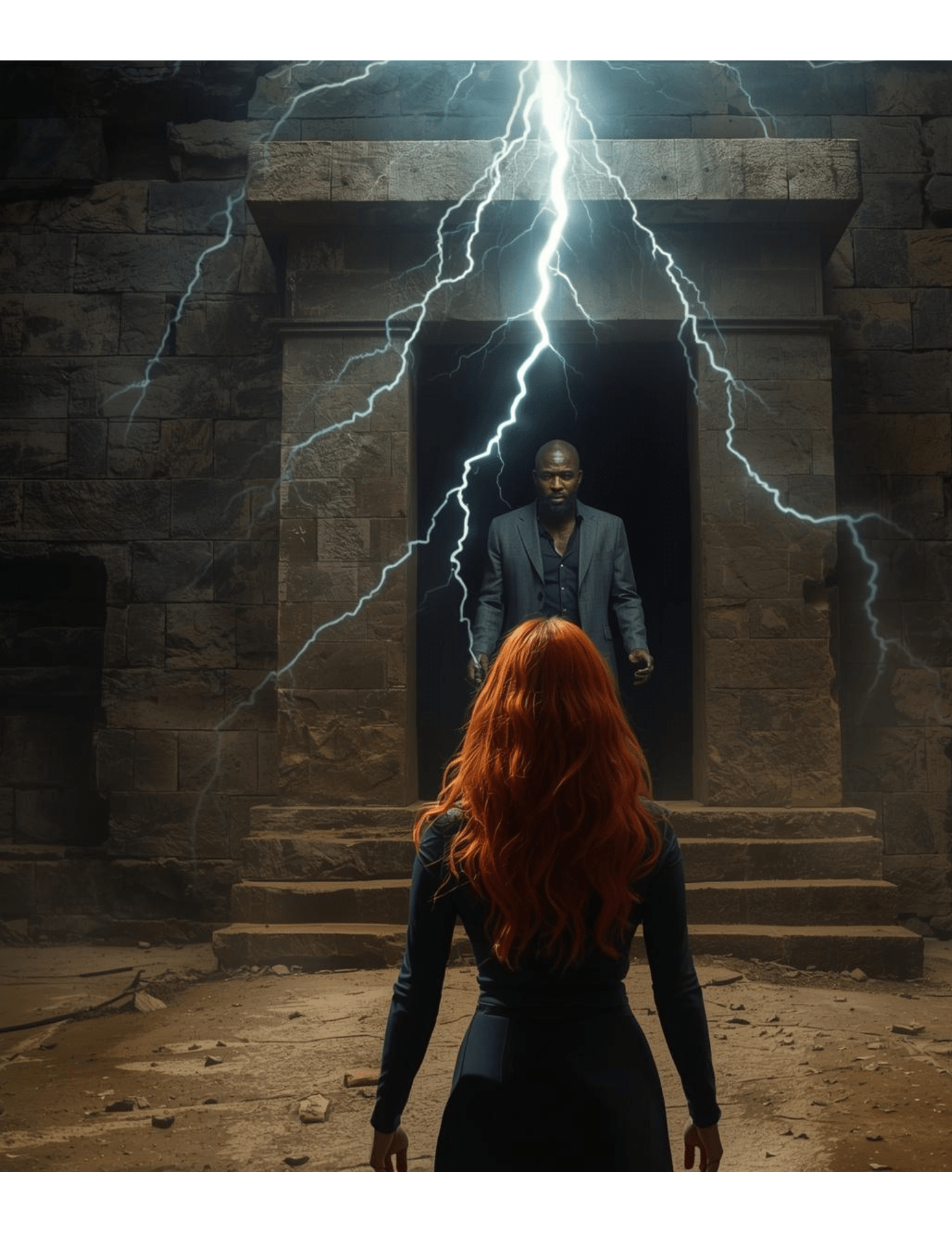
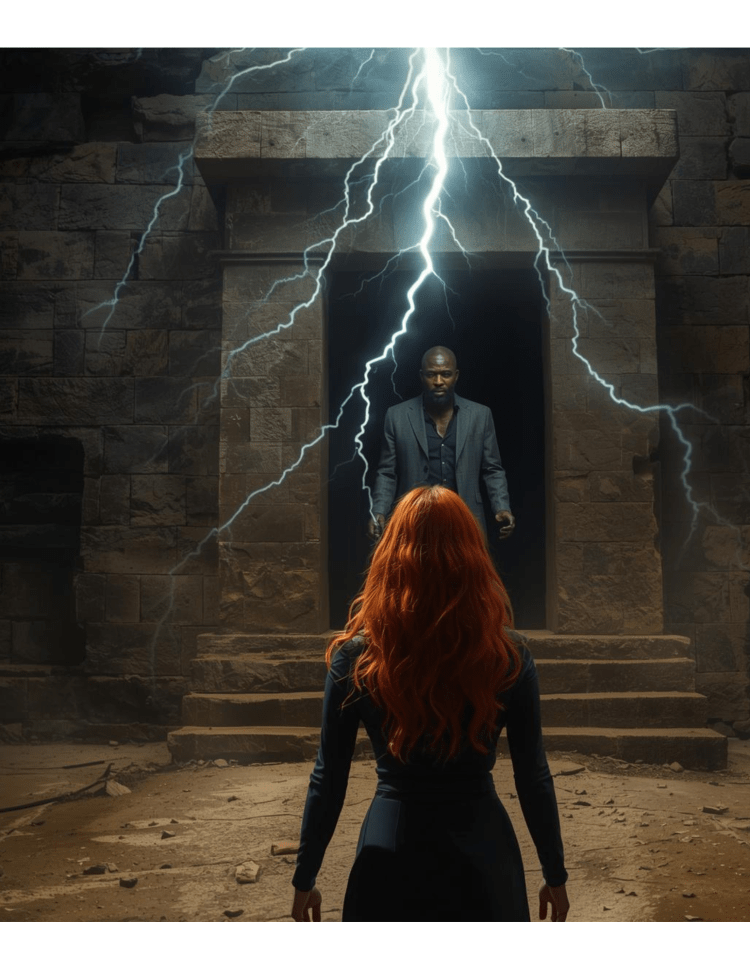
As the Woman Jesus called Mary Magdalene saw that the stone had been removed from the entrance, she ran to Simon the Man Jesus called Cephas. For he was to be the foundation stone — of the resurrected household of God. She also ran to the other disciple whom Jesus loved.
Thus the Woman Jesus called the Magdalene — recognized for centuries as being the Bride of Christ — is alarmed.
For the Rabbi, the Teacher of Israel, the forerunner had testified saying:
“I am not the Christ, but sent ahead of Him. The Bride belongs to the Bridegroom. The “philos” the belovedfriend of the bridegroom stands and listens for him, and is overjoyed to hear the bridegroom’s voice. “
This beloved friend of the bridegroom said this before his head was taken, placed on a plate, and his body laid in a tomb, a house of the dead.
The Woman Jesus called the Magdalene watched as:
The veil of the temple was torn in two from top to bottom. The earth quaked, and the rocks were split. The tombs broke open, and the bodies of many saints who had fallen asleep were raised.
After Jesus’ resurrection, when they had come out of the tombs, they entered the holy city and appeared to many people.
But before Jesus’ resurrection, Mark reports that Joseph of Arimathea craved the body of Jesus (15:43 KJV).
And yet John reports it is both Joseph and Nicodemus who wrap the crucified body of Jesus in anointed linen cloths.
While Mark reports that it was Joseph who placed the crucified body of Jesus in his own new tomb that he himself had cut into the rock — then rolled a stone against the entrance of the tomb — and went away.
The Woman Jesus called the Magdalene weeps when she hears that the Stone — sealing the body of Jesus in Joseph’s tomb — has been taken away.
As she weeps, two angels appear to her — within the Tomb, after Simon and the Beloved Friend of Jesus have entered and left.
The angels ask her why she is weeping.
The Angel of the Lord appeared to Moses — the Great Teacher — in the burning bush, seated upon the mountain of the Lord, revealed God Himself.
Later the Great Teacher instructed his smiths to beat sheets of gold to make a branched lamp-stand for the Holy Place.
The priests kept this lamp lit day and night —to resemble the branched amygdala, the almond bush that their Teacher met on the Mountain of God.
Even though Simon the Man Jesus called Cephas and Jesus’ beloved friend John had departed from the Tomb, and did not yet understand—from the Scripture—how Jesus had to rise from the dead, they had already been set apart—to watch and to bear witness, as angels do.
They were called to watch over — and to accomplish — Jesus’ mission.
For in the book of Jeremiah, the prophet says:
And when the word of the LORD came to me, asking, “Jeremiah, what do you see?” “I see a branch of an almond tree,” I replied.
“You have observed correctly,” said the LORD, “for I am watching over My word to accomplish it.”
Was not Mary the Woman Jesus called the Magdalene? Was she not committed to the Word of the Lord and the accomplishment of the Amygdala?
And yet —Mary given the title The Magdalene — stood outside the tomb weeping.
And as she wept, she bent down to look into the tomb, and she saw two angels in white sitting where the body of Jesus had lain, one at the head and the other at the feet.
“Woman, why are you weeping?” they asked.
“Because they have taken my Lord away,” she said, “and I do not know where they have put Him.”
When she had said this, she turned around and saw Jesus standing there. But she did not recognize that it was Jesus.
“Woman, why are you weeping?” Jesus asked. “Whom are you seeking?”
Thinking He was the gardener, she said, “Sir, if you have carried Him off, tell me where you have put Him, and I will get Him.”
For previously, Jesus had taught the disciples to pray:
Our Father who is in the heavens, hallowed be Your name. Your kingdom come. Your will be done, as in heaven, also upon earth.
And the night when Jesus promised that the Advocate, the Holy Spirit would reveal Himself only to them, Jesus said:
You heard Me say, ‘I am going away, and I am coming back to you.’ If you loved Me, you would rejoice that I am going to the Father, because the Father is greater than I…
for the prince of this world is coming and he has no claim on me.
But I do exactly what the Father has commanded Me, so that the world may know that I love the Father. Get up! Let us go on from here…
I am the true vine and my father is the keeper of the vineyard — the gardener, the husbandman.
Thus as she wept,
Jesus said to her, “Mary.”
She turned and said to Him in Hebrew, “Rabboni!” (which means “Teacher”).
“Do not cling to Me,” Jesus said,
“For I have not yet ascended to the Father. But go and tell My brothers, ‘I am ascending to My Father and your Father, to My God and your God.’”
And yet —
Just before Israel was to enter the Promised Land — Joshua given the mantle of the Rabboni, the Great Teacher of Israel— told Israel not to worship the gods of other nations, saying:
“Rather, cling tightly to the LORD your God as you have done until now.”
With the hope of the festival of the Third Day — when Moses the Great Teacher ascended and spoke with God, and God answered in thunder — Mary the Magdalene, repeated what the Rabboni had said to her:
“Go and tell my brothers: I am ascending to My Father and your Father “— Christ, the everlasting Father — the Husbandman who belongs to you.
______________________________________
This is the sixteenth in a series of Epiphany reflections that paved the way for the Cross — and now reflects on the events in the season of Easter.
The next Epiphany reflection turns to the reinstatement of the Man Jesus called Cephas, who was also called Peter, and Simon the Fisherman.
For Simon, like Jonah of old had been reluctant to take up the Cross of Jesus. And yet Simon does have a change of heart — and does what Jeremiah and his angels do — watch over and accomplish Jesus’ mission.
If you would like to receive the next reflection, be sure to subscribe.
In the book of Ruth, Boaz, her redeemer, invites Ruth to dip her morsel into his dish of vinegar.
Face to face — the Amygdala and the Fig Tree — a covenant not corrupted, but preserved.
As the story unfolds, Boaz provides for Ruth, leaving portions of his harvest for her to gather. In time, he redeems her as his wife, and their son, Obed, enters the lineage — the bloodline — from which Jesus is born — a bloodline poured out and shared in the cup of communion.
When Boaz invited Ruth to eat “bread” and dip it in vinegar, he instructed his servants to give her a portion from his own table — a customary harvest provision, offered in hospitality to a foreigner gleaning among the reapers, a welcome refreshment.
This detail is easily overlooked — especially by those who do not recognize the significance of sharing a customary refreshment with one who is not of one’s own blood — one’s kin. Yet it comes just before her redemption.
What, then, might such a gesture mean when seen in the light of the Cross?
In the Gospel of John, the Rabbi called John — the forerunner and Teacher of Israel — gives this testimony:
“A man can receive only what is given him from heaven. You yourselves can testify that I said, ‘I am not the Christ, but am sent ahead of Him.’ The bride belongs to the bridegroom.
The friend of the bridegroom stands and listens for him, and is overjoyed to hear the bridegroom’s voice. That joy is mine, and it is now complete. He must increase; I must decrease.”
The Teacher of Israel, the Rabbi called John by his disciples, does not claim the Bride as his own. He stands watching, having heard the Bridegroom’s voice, and rejoices — bearing witness to what has been given, and to what is yet to be accomplished.
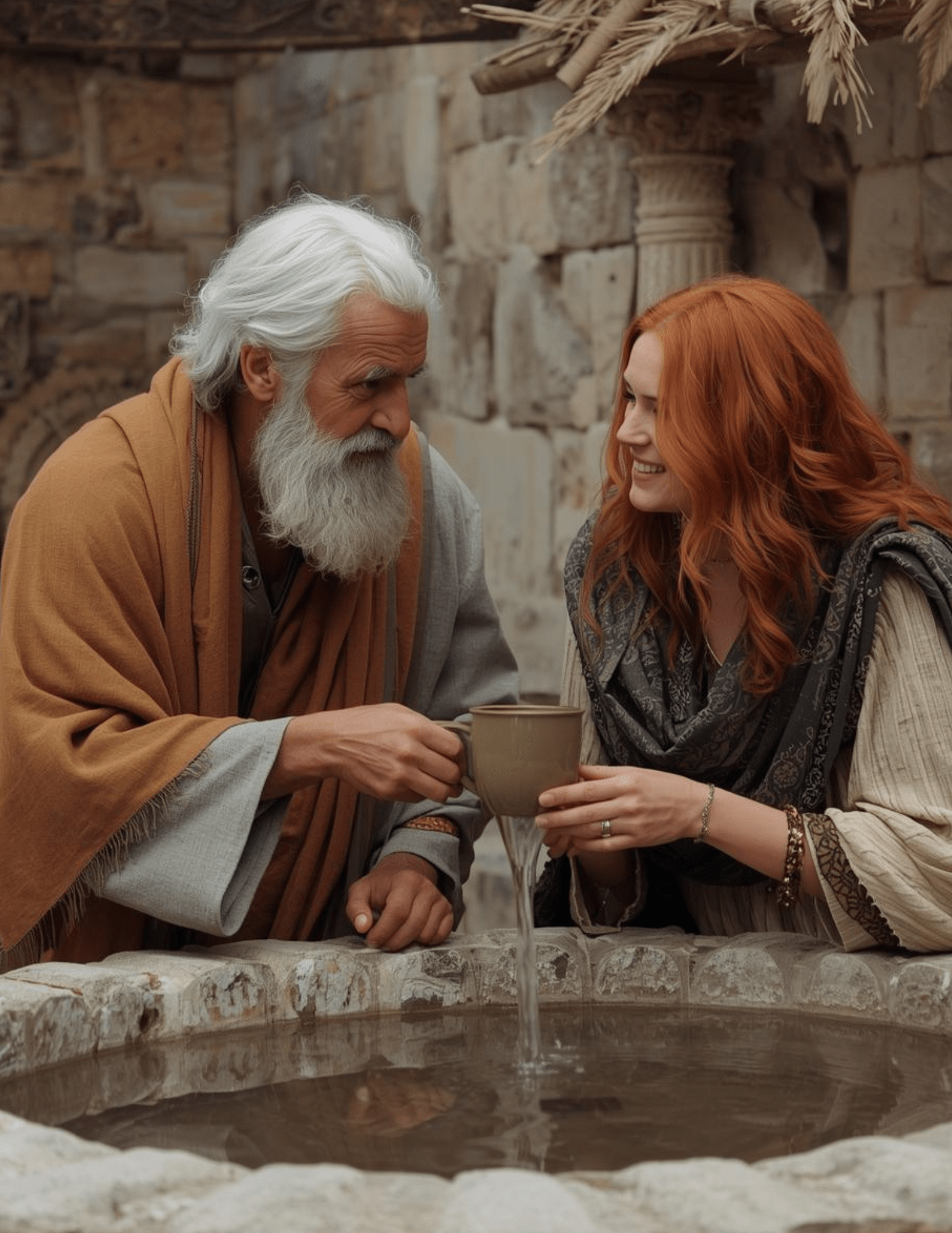
In that same Gospel, a woman comes to a well at noon to draw water — alone, while others rest or share the midday meal. There she meets the Teacher, who speaks of the Gift of God — given from heaven.
He says:
“If you knew the Gift of God — And — who is asking you for a drink, you would have asked Him —and — He would have given you water that would create in you a fountain — springing up into eternal life.”
The Woman did not yet know who the Gift of God was. She wondered if he might be the Christ — her true husband, the promised Bridegroom.
Would the water the Teacher offered be like a prime for a pump — cleansing her heart and sanctifying her — as the Bride belonging to the Bridegroom?
As she listened and drank in what had been given, the promise began to take form in her — the water this Teacher of Israel spoke of creating in her an eternal spring.
For when this Teacher met Nathanael, Nathanael asked:
“How do you know me?”
The Teacher of Israel replied,
“I saw you under the fig tree.”
Nathanael said to him,
“Rabbi, You are the Son of God, You are the King of Israel.”
And when the Woman drank this in, she began to realize the Truth and the Spirit, for she knew Nathanael’s name means the Gift of God.
From the beginning, the Spirit — Ruah — the Mother Spirit — hovered over the waters.
And God the Father thundered,
“Let there be light?
— And there was lightning.
Together, Father and Mother speak — and life is given.
On the third day, God spoke and brought forth life — plants, trees, and living water.
On the fourth day, the sun appeared.
And on the sixth day, Man — Adam and Eve — was formed — male and female — in the image and likeness of God.
In the Gospel of John, Jesus took the role of a homemaker — as a mother — and fed five thousand men — women and children — on a grassy hillside.
Some, like the green grass they sat upon, received what was given without recognizing how it was given or who was giving it. Others saw this as a prophetic sign — as if Jesus were the Prophet they had been waiting for, to make straight what had become bent — confusing her with John, who makes straight the roads.
For the Hebrew people and their ways had again been bent — as one long bent over — crippled under those who ruled over them.
Though divided as to who was the Christ, all were happy with the bread and fish they received.
Yet with so many gathered, they heard the words being spoken, but did not truly see the One who gave — the Mother who brings the energy — knows how to prepare, preserve and increase what is received, adding vinegar and salt to flavour and preserve.
For such bread received in thanksgiving — honours both the Mother and the Father — as the two speak as One.
“Truly, truly, I tell you, it was not Moses who gave you the bread from heaven, but it is My Father who gives you the true bread from heaven. For the bread of God is He who comes down from heaven and gives life to the world.”
“Sir,” they said, “give us this bread at all times.”
Jesus answers:
“I am the bread of life. Whoever comes to Me will never hunger, and whoever believes in Me will never thirst.
On the sixth day God said:
“Let Us make man in Our image, after Our likeness, to rule over the fish of the sea and the birds of the air, over the livestock, and over all the earth itself and every creature that crawls upon it.”
So it was on Friday — the sixth day — that Jesus was lifted up in public, bound to a wooden cross — refined and tested with iron.
But before this happened, Jesus was mocked, beaten and stripped — and all who watched saw such humiliation and turned away.
As they led Jesus out, the soldiers seized Simon, called the Black, coming in from the countryside — taking him to be a Cyrenaic — and laid the cross upon him to carry behind Jesus.
For when Jesus spoke of the path of suffering, Simon had said:
“Lord! This shall never happen to You!”
And Jesus replied:
“Get behind Me, Satan! You are a stumbling block to Me.
For you do not have in mind the things of God, but the things of men.”
And so Simon, once thinking as a Cyrenaic and not like God, is compelled to carry the cross of Jesus.
Yet Simon is the Anchor, the Rock of Jesus’ soul.
For it was Jesus — waiting to be glorified — who said,
“Whoever believes in Me will never thirst,”
and now from the Cross says:
“I thirst.”
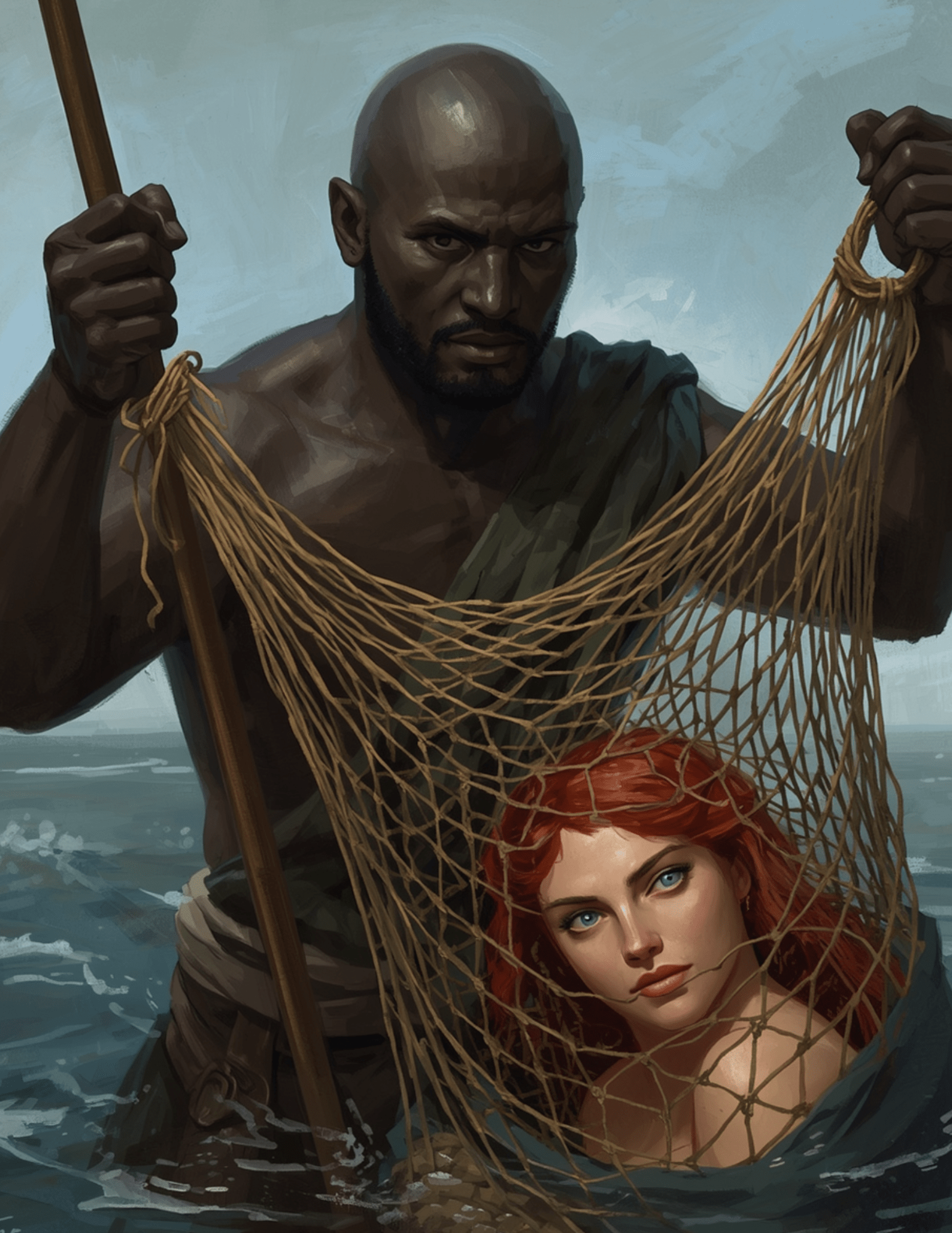
Now Simon is also identified as being the Father of Alexander and Rufus-the red-haired one. So it is difficult to see Rufus as the chosen one – the Mother of the Lord.
And so is it any wonder that some of those leading and accompanying Jesus out to Golgotha — the place called the skull, did not believe Jesus would die and rise again to life on the Third Day.
So is this why Jesus is being offered a sponge dipped in vinegar?
Was this merely to mock Jesus? Or was this gesture a public proposal — reminiscent of Boaz inviting Ruth to dip her morsel into his cup of vinegar?
For earlier, Jesus had refused the wine mixed with gall. Now, Jesus receives the vinegar.
And bowing her head, says:
“It is finished.”
And committing her Spirit into the hands of the Father, Jesus takes a final, single breath — and yields up her life into the Father’s hands.
For Jesus had said:
“You are the salt of the earth.”
And in the second book of Kings, Elisha went out to the spring, cast the salt into it, and said:
“This is what the LORD says: ‘I have healed this water. From now on neither death nor barrenness shall come from it.”
And so salt came to signify faithfulness — a covenant not corrupted, but preserved.
And Simon, who was compelled to carry the cross of Jesus, is now called to bear what has been placed in his hands — if he be willing — not as one thinking as a Cyrenaic, but as one tested and refined with iron — called to stand as the Bride’s Rock — and become salt for the earth.
___________________________________________
This is the fifteenth in a series of Epiphany reflections paving the way for the Cross.
What has been given — in bread, in vinegar, and in the last single breath — now rests in the hands of the Father, to be fulfilled on the Third Day.
In the season of Easter, the next Epiphany reflection turns to the Garden of the Tombs.
If you would like to receive the next reflection, be sure to subscribe.
Jesus, the Teacher of Israel, that met the Woman at Jacob’s Well, without a husband, said:
“If you knew the Gift of God — And who is asking you for a drink you would have asked Him and He would have given you water that would create in you a fountain — springing up into eternal life.”
He who is without deceit — does not yet cast the stone.
When Jesus stood up in the middle of the Feast of Tabernacles — having just arrived —and began to teach in the temple courts, the chief priests and Pharisees asked the officers:
“Why didn’t you bring Him in?”
“Never has anyone spoken like this man! ” the officers answered.
“Have you also been deceived?” replied the Pharisees. “Have any of the rulers or Pharisees believed in Him? But this crowd that does not know the law—they are under a curse.”
Nicodemus — the one Jesus identified as the Teacher of Israel— who had met with Jesus under the cover of darkness, and who himself was one of them, asked,
“Does our law convict a man without first hearing from him to determine what he has done?”
“Aren’t you also from Galilee?” they replied. “Look into it, and you will see that no prophet comes out of Galilee.”
The next day while Jesus was teaching in the temple courts. The scribes and Pharisees, brought in a woman caught in adultery.
They made her stand before them and said,
“Teacher, this woman was caught in the act of adultery. In the Law Moses commanded us to stone such a woman. So what do You say?”
They said this to test Him, in order to have a basis for accusing Him.
But Jesus bent down — and began to write on the ground…
When they continued to question Him, He straightened up— and said to them:
“Let him who is without sin among you be the first to cast a stone at her.”
And then Jesus bent down — again wrote on the ground.
When they heard this, they began to go away one by one, beginning with the older ones, until only Jesus was left with the woman — standing there.
Then Jesus straightened up —asked:
“Woman, where are your accusers?“
“Has no one condemned you?”
“No one, Lord”
She answered.
“Then neither do I condemn you.”
Jesus declared.
“Now go and sin no more.”
Knowing the Gift of God — And who it was who asked the Woman for a drink — the conversation at the end of this trial reveals a relationship.
For the Teacher of Israel, as Jeremiah once did, sees the Amygdala — and stands watch, bearing the staff, guarding the Word — watching over Her, that the Lord’s Word may be accomplished.
And so the Woman goes, and speaks again to the people saying:
“I am the light of the world. Whoever follows Me will never walk in the darkness, but will have the light of life.”
_________________________________
This is the fourteenth in a series of Epiphany reflections paving the way for the Cross.
Now in the season of Easter, the next Epiphany reflection turns to the chosen one of the Lord who says, “I thirst” — and to the vinegar given, before the final breath: “It is finished.”
If you would like to receive the next reflection, be sure to subscribe.
At the well in Samaria, the water was not a fountain. The water waited — deep, silent, and filtered by rock and soil — just as it had for generations.
God is Truth and Spirit — glorified in the witness of the forerunner.
Women came to draw water from this well, filling their water pots. Men filled larger containers to water their flocks.
And about 30 generations before Jesus began speaking, the Teacher of Israel, whom the Egyptians called Moses, came to a well in Midian. There, fleeing from Pharaoh, Moses defended Zipporah and her sisters from some shepherds who were harassing them.
In Samaria, a Teacher of Israel appears with a woman who has had five husbands and the one she is now with is not her husband. And he says to her:
If you knew the gift of God — And who it is who is asking you for a drink you would have asked him and he would have given you living water.
Everyone who drinks this water will be thirsty again. But whoever drinks the water I give him will never thirst. Indeed, the water I give him will become in him a fount of water springing up to eternal life.
Taking in this water and its promise the Woman — whom the Greeks call Photini and the Latins come to know as Sum Maria — goes into the city, leaving her water pot behind.
In the city of Capernaum, some thirty to forty miles north of Jacob’s Well — where the Woman left her water pot behind — there stood a synagogue of black basalt.
Here within this formidable black rock structure, people had come searching for Jesus after they had witnessed another astonishing sign. Before coming to this gathering place — where both women and men met for instruction, for teaching, and for fellowship — many had been on a grassy hillside near Bethsaida.
There, like a good homemaker, Jesus had fed five thousand with five loaves and two fish.
And as news of this spread, those the who caught it on the wind began to stir and wonder who this person might be.
Was this the Prophet foretold in the Psalms and the Prophets — perhaps recalling how Elisha had once fed a hundred with twenty loaves?
Those who had crossed over the water began telling others how the wind had risen, stirring the sea. Those in the first boat — experienced lead hands —were tossed about and sorely afraid.
And then, in the midst of the tempest, they saw Jesus walking upon the water, reaching out to them, saying:
It is I. Do not be afraid.
Then they welcomed Jesus on board, and together in the same boat, they reached the shore where they were heading.
On shore, those of the same boat found their way to the house of assembly hewn from black basalt.
There they found Jesus instructing the people in the ways of the Rabbis, and some began to call Jesus Rabbi. Yet others who came in different boats were not seeking wisdom or prophecy, but bread to fill their stomachs.
For having eaten and been filled, they later crossed over amazed to find the one who had fed the five thousand. They asked:
Rabbi, when did you get here?
For they had eaten the bread and had watched as the others — all in the same boat —departed first — without Jesus.
And Jesus said:
Do not work for food that perishes …but for food that endures to eternal life — the food the Son of Man will give you. For on this one God the Father has set His seal.
And when they asked what they must do, Jesus replied:
The work of God is this — to believe in the One He has sent.
Yet they still asked for a sign, recalling the manna given in the wilderness to the Teacher of Israel — whom the Egyptians called Moses. And so the teaching of Jesus turned again:
It was not Moses who gave the bread from heaven, but the Father who gives the true bread — the bread that comes down from heaven and gives life to the world.
Yet even this was not spoken for all to grasp — but for those who have ears to hear. For when the Feast of Tabernacles drew near, Jesus sent the disciples ahead to speak openly.
But Jesus did not go with them — until, in the midst of the feast, Jesus stood up and began to teach in the temple courts.
And the people were astonished, saying:
How does this man know such things, having never studied?
And others said:
Have the rulers truly recognized that this is the Christ? But we know where this man is from. When the Christ comes, no one will know where He is from.
Then Jesus, still teaching in the temple courts, cried out:
You know Me, and you know where I am from. I have not come of My own accord, but He who sent Me is true. You do not know Him, but I know Him, because I am from Him and He sent Me.
Though some sought to seize Him, no hand was laid upon Him, for His hour had not yet come. And many among the crowd believed in Him, and said:
When the Christ comes, will He perform more signs than this man?
When the Pharisees heard the crowd whispering these things, they sent officers to arrest Him.
So Jesus said:
I am with you only a little while longer, and then I am going to the One who sent Me. You will look for Me, but you will not find Me; and where I am, you cannot come.
At this, the Jews said to one another:
Where does He intend to go that we will not find Him? Will He go to the Jews dispersed among the Greeks — and teach the Greeks?
These questions hung in the air. And then —
On the last and greatest day of the feast, Jesus stood up and cried out in a loud voice:
If anyone is thirsty, let him come to Me and drink. Whoever believes in Me, as the Scripture has said: “Streams of living water will flow from within him.”
He was speaking about the Spirit, whom those who believed in Him were later to receive. For the Spirit had not yet been given, because Jesus had not yet been glorified.
For the Hour had not yet come —just as a man and a woman, when wed, become one flesh — in that union, are glorified.
____________________________________
This is the thirteenth in a series of Epiphany reflections paving the way for the Cross.
Now in Easter Week, the next Epiphany reflection turns to the moment when the Woman caught in the act of adultery is brought to trial — and when the Light revealed as the Word is watched over and accomplished.
If you would like to receive the next reflection, be sure to subscribe.
Many stories weave in and out — like a woman’s braided hair.
An author may begin at one point to draw the reader in, then return to what came before, or move ahead, revealing what could not be seen at first.
Immediately the man was made well, and he picked up his mat and began to walk.
For some truths cannot be told all at once— they must be uncovered slowly, as the reader comes to know the characters as they come to know one another, and themselves.
At the well bequeathed to Joseph, belonging to the people of Samaria, a man and a woman met in the open, sharing a common cup.
As they spoke, it became clear that one was a Jew and the other a Samaritan. And this attracted attention, for Jews and Samaritans were not to share anything personal with one another — especially not in public.
Yet when his disciples returned, they said nothing.
And when the Woman got up and went into the city and said, “Come and see…many of the Samaritans from that town believed in Jesus because of her testimony: “He told me everything I ever did.”
Sometime later, Jesus appears in Jerusalem, standing outside the Sheep Gate, by a pool — called Bethesda, or Kolymbethra, a place of deep water, by those — Jew and Samaritan alike — who spoke Greek.
Here, beside the water, many lay waiting — the sick, the blind, the lame, the paralyzed. Each one hoped to be the first to enter when the water stirred — and receive salvation.
Among them was one who had been an invalid for thirty-eight years — unable to walk freely in public, a cripple in the eyes of those who passed by. But how was this known?
For when Jesus sees this person lying there, he realizes that this person has been suffering for thirty-eight years. But how would Jesus know a personal detail such as this?
Was he simply clairvoyant?
Or did he recognize this person as a Samaritan?
For it was unlawful for Jews and Samaritans to associate with each other, and this law had kept Jews and Samaritans apart — suffering, a burden borne across thirty-eight generations.
Upon seeing this person at this pool.
Jesus says: Do you want to get well?
“Sir,” the invalid replied, “I have no one to help me into the pool when the water is stirred. While I am on my way, someone else goes in before me.“
Then Jesus told her, “Get up, pick up your mat, and walk.”
Immediately the man was made well — and she picked up her mat and began to walk.
Now this happened on the Sabbath day, so the Jews said to the man who had been healed, “This is the Sabbath! It is unlawful for you to carry your mat.”
For to carry a mat was to carry a burden — and by the law as it was interpreted, no burden was to be borne on the Sabbath.
Yet here, the healed one — carrying her mat in public on the Sabbath —is singled out as a sinner.
So in response to this charge, she answered: The man who made me well told me, “Pick up your mat and walk.”
“Who is this man who told you to pick it up and walk?” they asked.
But the one who had been healed did not know who it was, for Jesus had slipped away while the crowd was there.
Did she truly not know? Or did she simply not want to betray him? Or had she suddenly realized that by saying “he told me,” she was implying that he had led her to break the law — like the serpent who had tempted Eve.
Later, Jesus found her in the Temple and said. “See, you have been made well, Stop sinning, or something worse may happen to you.”
Then the man went away and told the Jews that it was Jesus who had made her well.
___________________________________________
This is the twelfth in a series of Epiphany reflections paving the way for the Cross.
Now in Holy Week, the next Epiphany reflection turns to John 7:38, as Jesus proclaims that whoever believes in him will later receive the Spirit — through whom streams of living water will flow from within.
If you would like to receive the next reflection, be sure to subscribe.
News travels through the grapevine that Jesus was baptizing and winning more disciples than John, the Teacher of Israel identified as the Forerunner.
If you knew the Gift of God — AND who it is who is asking you for a drink
At the well given to Jacob’s son Joseph, a woman identified as a Samaritan appears. Joseph is remembered not only for his God-given prophetic gift, but also for his husbandry.
Yet some will argue that this oral tradition — what some call the grapevine — is not a reliable source. The fruit and juice it produces is the proof. Yet oral testimonies spread from mouth to mouth have a tendency to spread misinformation mixed with facts.
Yet a wine maker or bread maker will testify that the yeast is what causes the bread to rise and the fruit to ferment and make the best wine.
After the two teachers conversed under the cover of darkness, the Teacher of Israel, called John by his disciples, was approached —
(before he was put in prison): A dispute arose between John’s disciples and a certain Jew over the Issue of ceremonial washing…
So John’s disciples came to him and said “Look, Rabbi, the One who was with you beyond the Jordan, the One you testified about — He is baptizing, and everyone is going to Him.” …
So the Rabbi, the Teacher of Israel replied:
You yourselves can testify that I said, ‘I am not the Christ, but am sent ahead of Him.’
The bride belongs to the bridegroom. The friend of the bridegroom stands and listens for him, and is overjoyed to hear the bridegroom’s voice. That joy is mine, and it is now complete…
What confuses the people in the dark is that this man is the Teacher of Israel and speaks with the voice of Isaiah saying:
I am a voice of one calling in the wilderness, ‘Make straight the way for the Lord.’
and when they ask him if he is the Prophet he says:
I am not the Prophet.
What confuses those in the dark will come clear when they realize this teacher — who is clearly the forerunner and the friend of the bridegroom. — is Jesus the forerunner (Hebrew 6:19-20) who heard the bridegroom’s voice when he spoke with Nathanael:
Who asked in (John 1:47): How do you know me?
And Jesus replied: I saw you under the fig tree before Phillip called you.
In that same chapter of John, Simon is identified as the Son of John, while other translations say the son of Jonah.
Yet it is Simon who is given the designation of the Rock —which carries with it the responsibility of the Rock of ages — and the Father, Adam saw or heard when he hid himself under the Fig Tree.
Now you may recall in Epiphany VIII: The Anointing:
When the Woman with unbound hair enters — carrying an expensive alabaster jar — Simon thinks to himself:
If this man were truly a prophet, he would acknowledge who is touching him — and how he himself knows of her sin.
The Teacher observes Simon sitting aside, withholding his welcome. He turns toward Simon, and the two enter into conversation. The Teacher tells a parable — of two debtors, one owing much, the other little — and asks Simon which will love more when the debut is forgiven.
Simon answers: the one forgiven more.
The Teacher says to him: You have judged correctly.
With these words, the Teacher confirms Simon’s role as Father of the Law and as Nathan, the prophet, a true Israelite beneath the fig tree of memory — who once judged David. For David had abused his power when he took Bathsheba, the wife of another man, and sent her husband into battle where he lost his life.
The fourth chapter of John’s Gospel brings two people out of darkness to talk under the Noon sky where there is no shadow. Here the Light becomes known as Photini — the name given by the Greeks to the Woman appearing at the Well, who is asked for a drink by a prominent Jew.
The name Photini means enlightened one and or luminous one. Scripture situates the Well in the land of the Samaritans at Jacob’s well, bequeathed to Joseph. Thus this woman was identified as Mary Magdalene up until 1970 possibly because in Latin the phrase Sum Maria means, I AM Maria.
As this well known story unfolds, Jesus is identified as being a Jew — not an Israelite.
Whereas when Nathanael asked Jesus: how do you know me?
Jesus said: you are a true Israelite and there is no deceit in you.
And then Nathanael replied: You are Christ the Son of God the King of Israel.
Note. Nathanael does not say “King of Kings.”
So without knowing the meaning of the Hebrew name Nathanael, it is easy to assume Nathanael is just someone who was waiting for the messiah to appear — and see him only as one of the first to believe in Jesus as Christ the Son of God the Father.
However the name of Nathanael as does the name of Simon carries with it something more profound. For the name Nathanael means the gift of God.
Thus pay attention: when Jesus the son of God the Father says, “I met you under the Fig Tree.” This carries with it the idea that Jesus is the born-again Adam — the New Adam — the only Son from the Father, full of grace and truth.
As confusing as this all becomes, Jesus the Forerunner does make the way straight for the Lord for those paying attention. For Jesus the Forerunner is also know as Rabbi John. And the name John means full of grace.
And John does say:
You yourself can testify that I said I am not the Christ, but am sent ahead of Him. ‘For the Bride belongs to the Bridegroom. The friend of the bridegroom stands and listens for him, and is overjoyed to hear the bridegroom’s voice. That joy is mine and is now complete.’
So when did the Forerunner hear the Bridegroom’s voice?
For those paying attention — It was under the Fig Tree when Jesus the Son of the Father spoke with a man given the name Nathanael by those overhearing the conversation. So the Woman known to the Latins as Sum Maria begins to proclaim:
Come, see a man who told me everything I ever did. Could this be the Christ?
And with that proclamation, is she also asking:
Is there a husbandman that I do not yet know, waiting for me?
For the man who asked her for a drink had said:
If you knew the gift of God — AND who it is asking you for a drink, you would have asked Him and he would have given you the water that would spring up in you and make you and everlasting spring.
And Jeremiah once said:
For My people have committed two evils: They have forsaken Me, the fountain of living water, and they have dug their own cisterns—broken cisterns that cannot hold water.
For the Fifth Commandment entrusted to the Teacher of Israel says:
Honour your father and mother, so that your days may be long in the land that the LORD your God is giving you.
Whereas yeast is necessary for the kingdom to spread and rise, yeast can also lead to the demise of the Pharisees who sin under the cover of darkness.
They hide the truth in plain sight while speaking in parables and giving evasive answers.
And they toss in words and names that only a select few will puzzle over and search for the meaning.
_______________________________
This is the eleventh in a series of Epiphany reflections paving the way for the Cross.
Now in Lent, the next Lenten Epiphany turns to the healing of a paralytic — a cripple — at the pool of Bethesda.
If you would like to receive the next reflection, be sure to subscribe.








 Linda Vogt Turner